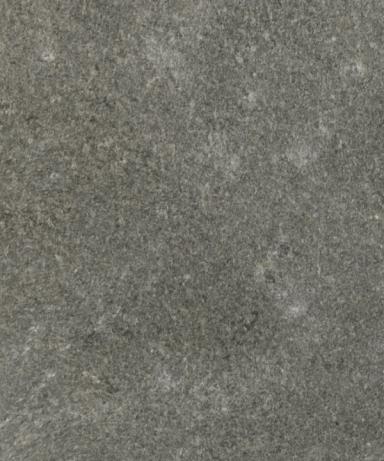
Quartzite

Quartzite is a rock that mainly consists of the mineral quartz. Quartzite often arose from (sedimentary) quartz sand that was initially compressed into sandstone. The individual sand grains can still be seen in such sandstone. Quartzite can also be further hardened by pressure and temperature or by deposition of binding gravel, after which the individual grains are no longer visible.
Quartzite

What is Quartzite?

Quartzite is a natural metamorphic rock that forms through the transformation of quartz-rich sandstone under the influence of extreme heat and tectonic pressure. During this process, known as recrystallization, the original sand grains fuse into an extremely compact and homogeneous structure.

Composition and Origin
  • Mineralogy: Consists primarily of quartz (often more than 90%).
  • Formation: Created deep within the Earth's crust, resulting in a material considerably harder than the sandstone from which it originated.

Distinction from Similar Materials

It is essential not to confuse natural quartzite with 'Quartz' (composite). Quartzite is 100% natural, contains no resins, and is completely UV-resistant. Compared to marble, quartzite is chemically inert, meaning it does not etch when in contact with acids (such as lemon juice or vinegar).

Essential Material Properties

For architects and engineers, quartzite offers performance that meets the strictest standards for both residential and public projects.

  • Hardness: Typically scores a 7 on the Mohs scale. This makes it more scratch-resistant than glass and most types of steel.
  • Porosity: Due to its high density, quartzite has a very low water absorption rate, contributing to its frost resistance and stain resistance.
  • UV Resistance: Impervious to ultraviolet radiation; colors do not fade with prolonged exposure to direct sunlight.
  • Thermal Stability: Excellent heat resistance, making it a primary material for kitchen countertops and facade cladding.

Factual Advantages and Disadvantages

"Quartzite offers the visual richness of limestone with the structural hardness of gemstone."

Advantages

  • Extreme durability and lifespan (50+ years).
  • Unique, natural veining that cannot be reproduced by ceramics.
  • Suitable for both indoor and outdoor applications (homogeneous aesthetics).

Considerations

  • Limited Workability: The hardness requires specialized diamond tools and craftsmanship.
  • Investment: Extraction and processing costs are higher than for softer stone types.

Applications and Use

Thanks to the versatility of quartzite, a project can speak a continuous visual language from the living room to the terrace.

Indoor

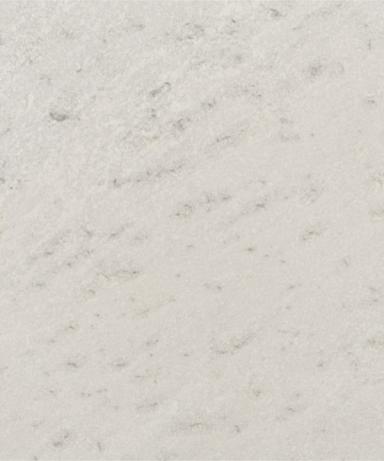
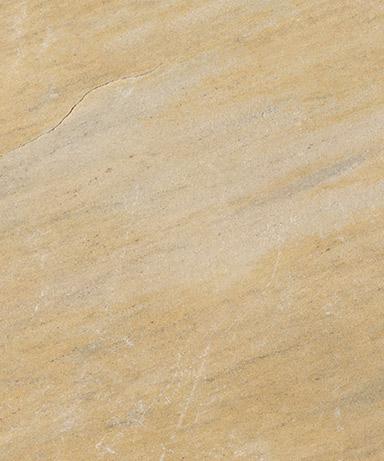
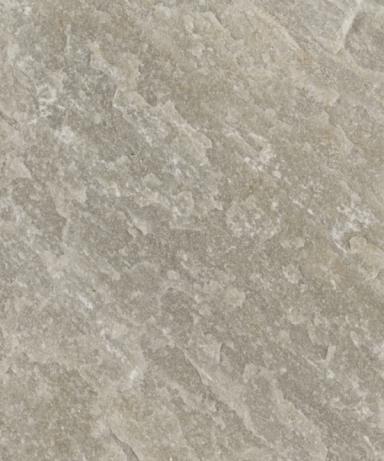
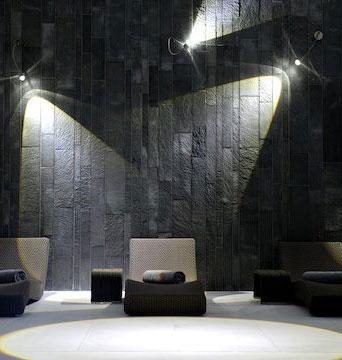
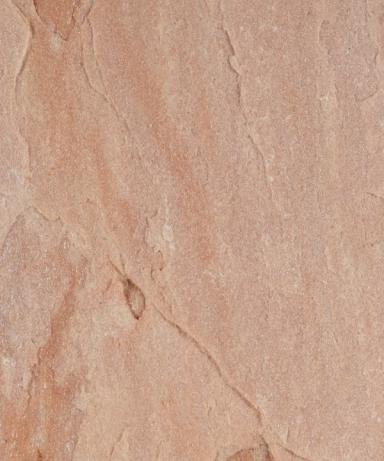
Ideal for high-traffic floors, wall cladding in wellness spaces, and exclusive kitchen countertops. Materials such as Flamingo or Silver Quartzite are often chosen for their texture and light reflection.

Outdoor

Due to its frost and slip resistance (with the appropriate finish), quartzite is extremely suitable for terraces and pool surrounds. Albino Light and Ara are popular choices due to their thermal properties (stay cooler underfoot).

See our applications page for technical details per space.

Maintenance and Durability

Quartzite is a low-maintenance material. For projects, we recommend:

  • Cleaning: Use of pH-neutral cleaners. Avoid abrasive products, although the stone is resistant to them.
  • Sealing: An initial impregnation is recommended to completely seal the minimal porosity against oils.
  • Lifespan: Quartzite is a 'generational material' with an extremely low lifecycle cost due to minimal need for replacement.

When not to Use Quartzite

Despite its superior properties, there are scenarios where alternatives should be considered:

  • Extreme Budget Constraints: When the initial cost is more important than the total lifespan of the material.
  • Complex Curves: For very intricate 3D detailing, the hardness of the stone can lead to disproportionately high production costs.
  • Uniformity: If a project requires a 100% identical pattern without natural variation (in that case, engineered stone or ceramics are more suitable).

Comparison with Alternatives

Conceptually, quartzite stands above granite in terms of aesthetics, and above marble in terms of hardness. Where ceramics have a printed top layer, quartzite is colored throughout, which is essential for edge finishes and visible miters in architectural details.

Discover quartzite in our completed projects: