All about Flagstones: History, Types and Uses
All about Flagstones: History, Types and Uses
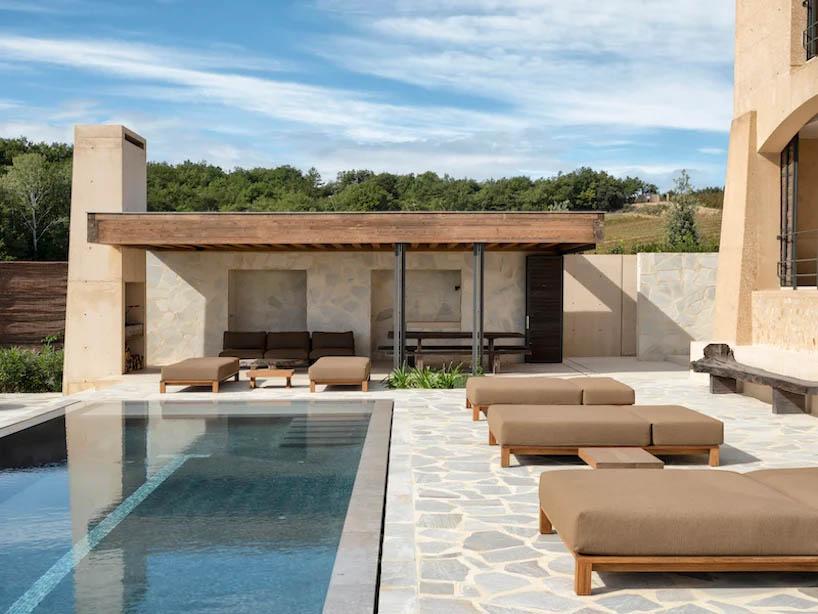
Flagstones —also called rubble stones or "shards"—are thin, irregularly shaped slabs of natural stone. Their organic shape and authentic charm have made these irregular tiles a real comeback in modern design in recent years. Available in a variety of stone types (quartzite, sandstone, or limestone) and colors—from strikingly bright to soft earth tones—they form the missing pieces of the puzzle that seamlessly connect indoor and outdoor spaces. In this blog post, we delve deep into the world of flagstones: what they are exactly, how they've been used throughout history, the different types found worldwide, and the best way to install and maintain them.
What are flagstones?
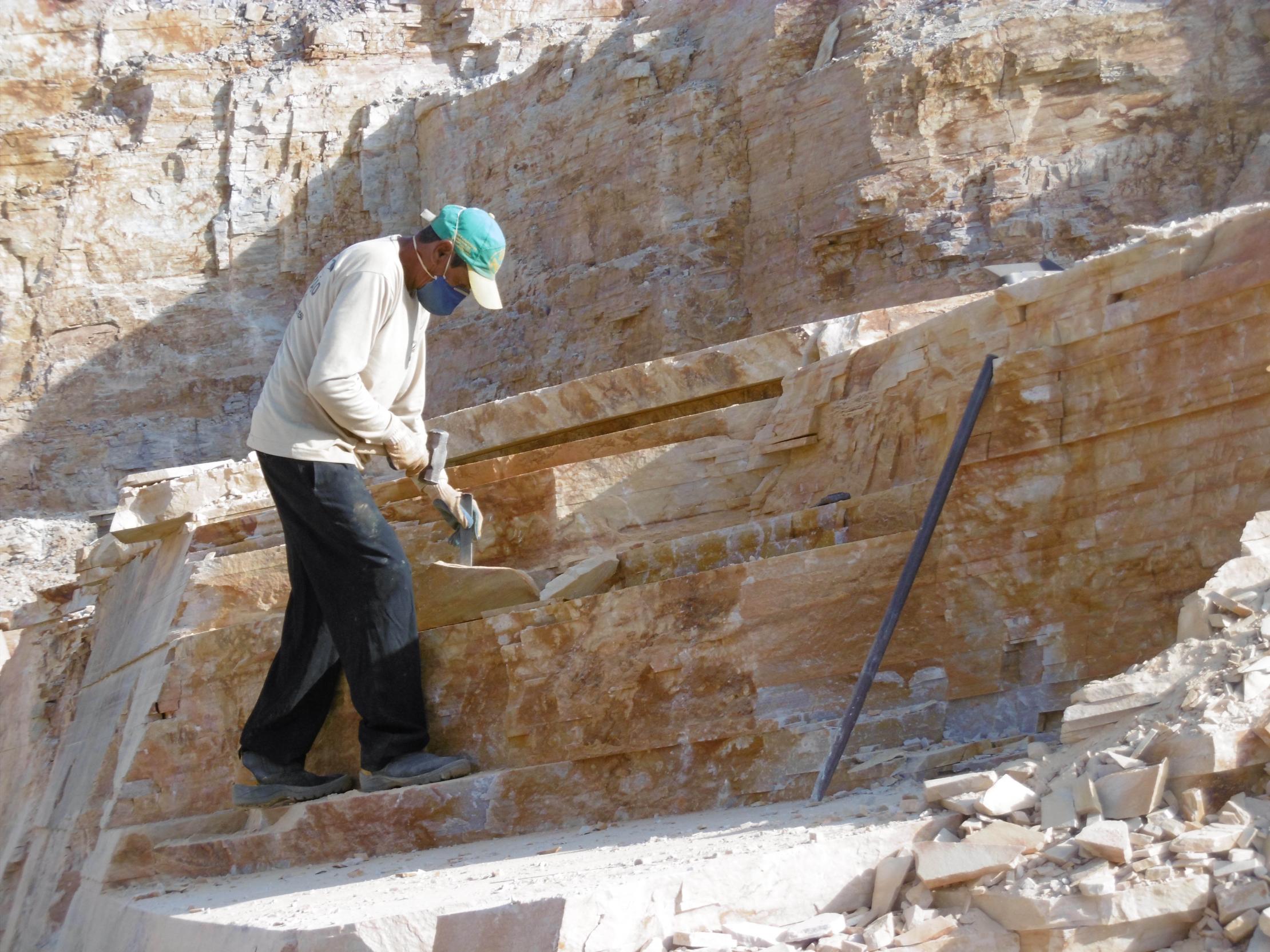
Flagstones essentially refer to the shape and laying pattern of the stone, not to a specific type of stone. It is somewhat comparable to a mosaic of loose natural stone fragments without a fixed grid pattern. This laying method – also called crazy paving in English – dates back to Roman antiquity, where people already used broken stones to build roads and floors. Certain rocks, such as slate and quartzite, naturally split into flat layers. In the quarry, large, flat slabs are split from the rock using heavy machinery, which have an irregular shape, varying thickness, and naturally split surfaces. These rough slabs are the flagstones, which can be used without further processing or, if necessary, split/sawn to size for a suitable result. The preservation of the natural fracture surface gives flagstone surfaces their characteristic rustic texture.
Application: from past to present
Flagstones have remained popular as paving and cladding materials throughout the centuries. Many traditional villages used local stone as flagstones in streets, yards, and floors. For example, Karystos in Greece has been known since antiquity for its famous flat slate slabs laid in patios and paths. In medieval Europe, irregular cobblestones and rubble stones were found in squares and monastery gardens. Even in modern architecture, flagstones appear in iconic projects – architect Frank Lloyd Wright, for example, seamlessly integrated local flagstone floors from inside to outside in his designs, strengthening the connection with the natural environment.
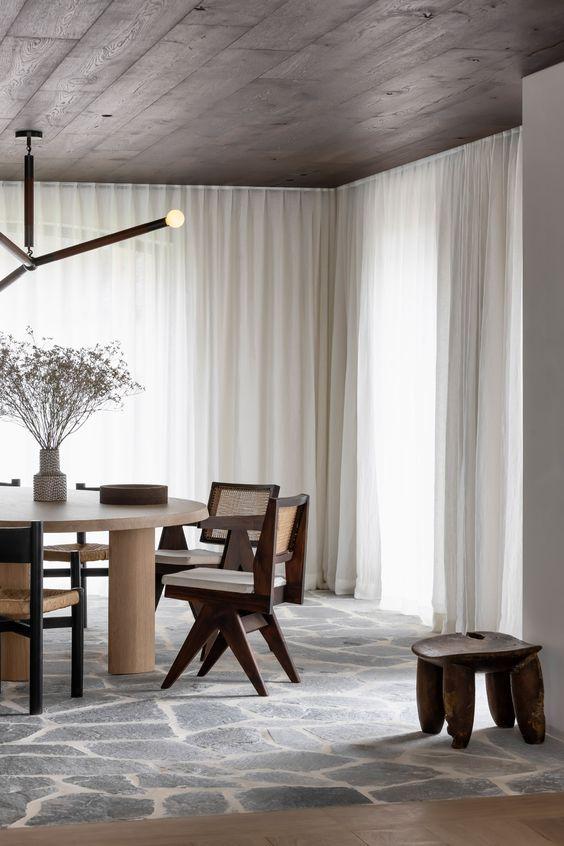
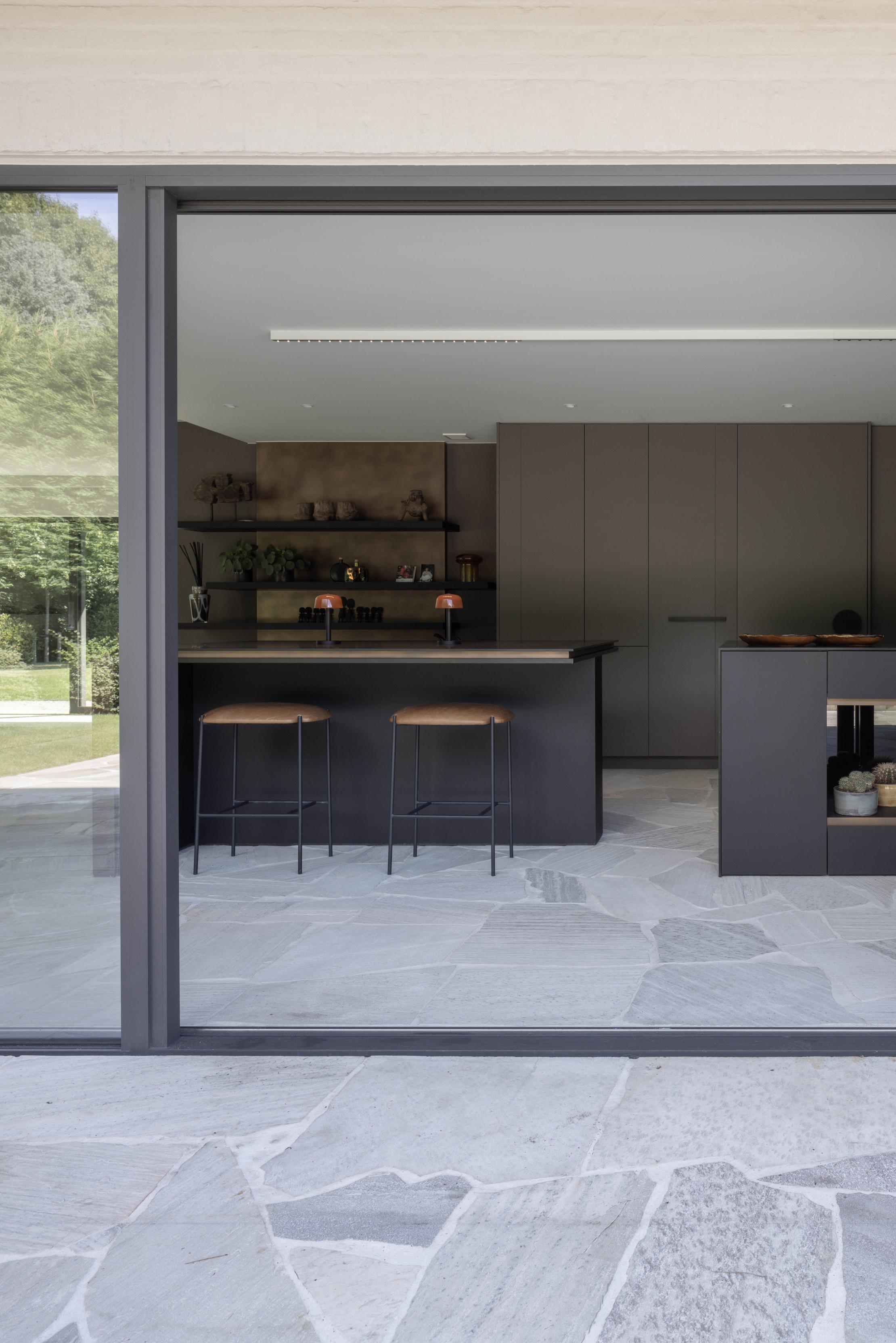
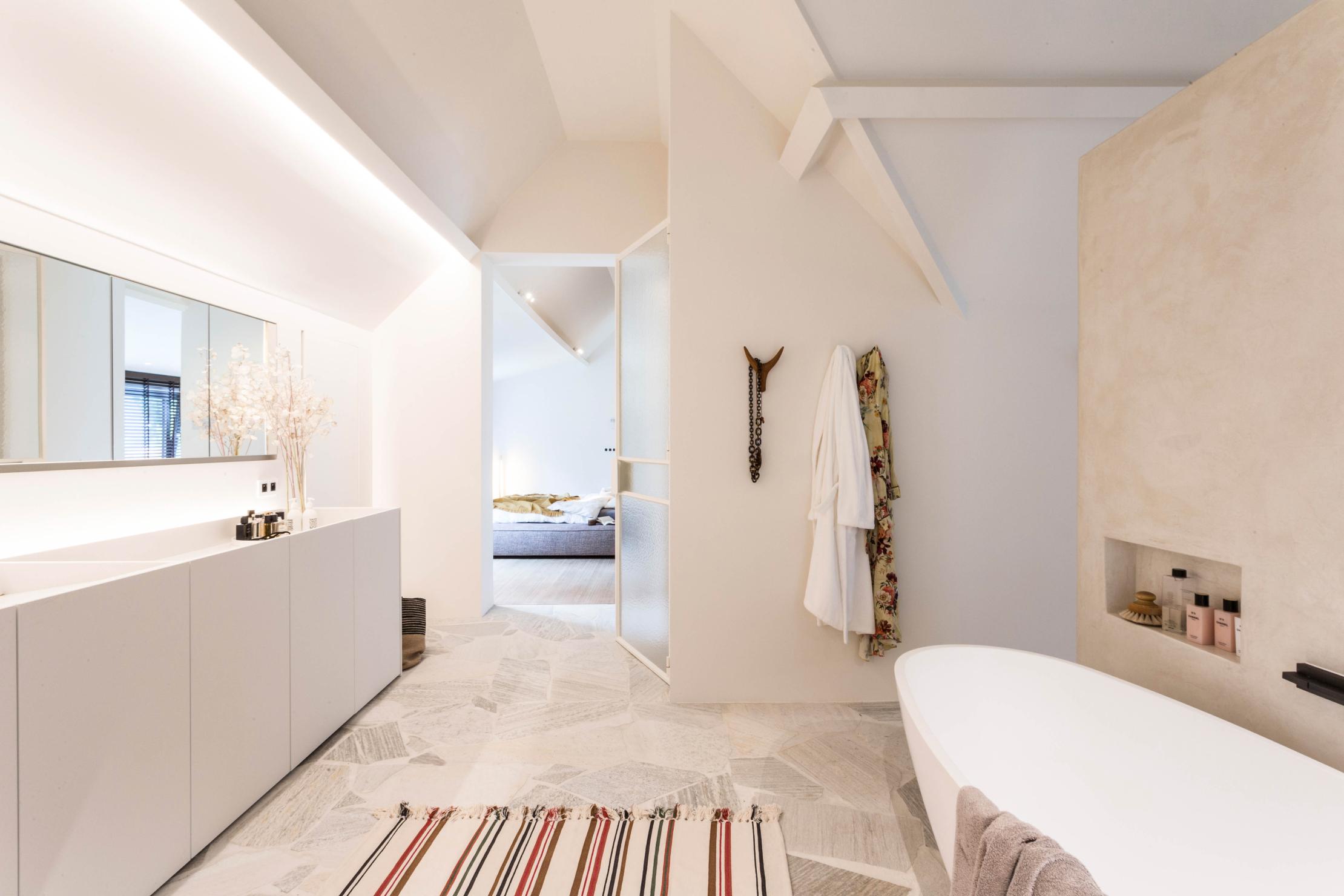
Today, flagstones are used both indoors and outdoors. Outdoors, they're popular for patios, garden paths, driveways, and around swimming pools. Their irregular shape creates a playful effect without the rigid tile grid, allowing them to blend beautifully into organic landscaping. Moreover, the often wide, continuous joints allow rainwater to easily infiltrate the subsoil, improving puddle formation and drainage. Indoors, you'll find flagstones in rustic kitchens, living rooms, or wine cellars for a country-style feel, but also in contemporary interiors where designers want to add a natural, timeless touch. A popular concept is extending a flagstone floor from the inside out: the same natural stone extends from the living room onto the patio, creating a visual blend of interior and exterior. The result is an indoor-outdoor experience that's highly valued by both homeowners and architects.

Flagstone types worldwide
In virtually every country where natural stone is quarried, there are varieties that can be used as flagstones. Below, we discuss several prominent types of flagstones and their characteristics – a true journey around the world through quarries and stone:
Brazilian quartzite (Minas Gerais)
In Brazil, specifically in the state of Minas Gerais, one of the most exceptional quartzite flagstones is mined. STONE sources natural stone from an iconic quarry here and exclusively offers three rare quartzite flagstones: Albino Yellow , Albino White, and Flamingo . These Brazilian flagstones are notable for their unique color palette—from the soft white/yellow of Albino to the pinkish-orange hues of Flamingo—which you won't find from any other supplier. Quartzite is a metamorphic rock formed from sandstone and is known for its extreme hardness and low water absorption. Brazilian Quartzite flagstones are therefore exceptionally durable, colorfast, and frost-resistant. They are ideal for heavily used patios or indoor floors that require an exotic, luxurious appearance. The natural, cleaved surface also provides excellent slip resistance, making them ideal for use around swimming pools or other wet areas.
Swedish quartzite (Flammet)
Flammet is a high-quality flagstone from Sweden, quarried in the town of Finnsäterna (Offerdal) in Jämtland. The material is a dense quartzite (sometimes classified as phyllite/slate) with a characteristic anthracite-gray color. Due to its quartz-containing composition, Flammet quartzite has very low porosity and water absorption, meaning that moisture and frost have little effect on this stone. Flammet flagstones typically have a flat cleavage surface with subtle sparkles and an elegant, nuanced structure. The stone has a sleek appearance, yet retains a natural charm and is therefore suitable for both modern and rustic designs. Interesting fact: Flammet is very similar to the famous Alta quartzite from Norway, but is slightly darker in color and even more robust in nature. The standard thickness of Swedish Flammet flagstones is 2-4 cm, but thinner varieties are also available, suitable for wall cladding or indoor applications. Because this quartzite absorbs virtually no moisture and has a high density, it can be used outdoors in harsh winters without any problems – it has even been tested to be frost-resistant in extremely cold climates.

Greek slate (Balak)
From the Marmari region on the Greek island of Evia comes the Balak flagstone, a dark gray to almost black natural stone. Balak is actually a local type of slate (schist) sourced from the renowned Karystos quarries near the village of Agia Irini. This region has been renowned since ancient times for its natural stone slabs—the “Karystos stones”—which have been used for paving and construction projects for centuries. The modern Balak flagstone continues this tradition with a material that is exceptionally hard and durable. Schist from Marmari has a high density (approximately 2700 kg/m³) and a water absorption rate of less than 0.5%, meaning it absorbs almost no moisture and is highly resistant to frost and wear. These flagstones have a slightly rough, layered texture and a deep anthracite color, which provides a beautiful contrast in both lush gardens and sleek urban settings. Greek Balak flagstones are often used on patios, garden paths, and even facade cladding for a rustic, Mediterranean look. Thanks to their authentic origins and qualities, they are popular with architects who want to bring a touch of the old world into modern projects.
Indian sandstone (Kandla Grey & Merano)
India is one of the world's largest producers of natural stone, and Rajasthan , in particular, provides a large quantity of flagstone material. Two popular varieties are Kandla Grey and Kandla Brown sandstone – also known at STONE as Focus (grey) and Merano (brown). Kandla Grey is a hard grey sandstone quarried in the Bhilwara and Bundi regions of Rajasthan. This stone has a fine-grained structure, sometimes with subtle veining or color variations, and is known for its robustness. Thanks to its quartz and silica cement, Kandla Grey is very hard and weather-resistant. The neutral grey shade complements modern designs perfectly and provides a beautiful canvas for minimalist gardens, for example.
Kandla Brown (Merano) – often referred to internationally as Autumn Brown – is a sandstone with warm, earthy tones. The color is a blend of light and dark browns with occasional hints of gray. This sandstone therefore has a very natural and earthy appearance, ideal for rustic patios or driveways. Like the gray variety, Kandla Brown is hard and wear-resistant, and relatively easy to maintain. A light weathering or patina over time only adds to the character of these stones. Indian sandstone flagstones are typically supplied in thicknesses of approximately 2-3 cm and have a cleft, antique finish on the surface. They can be used both in the garden (paths, patios, steps) and indoors (conservatories, verandas). Thanks to their combination of affordability, beautiful colors, and robustness, Kandla flagstones are popular with garden owners, architects, and contractors worldwide.
Porphyry (Porfido Rosso from Italy)
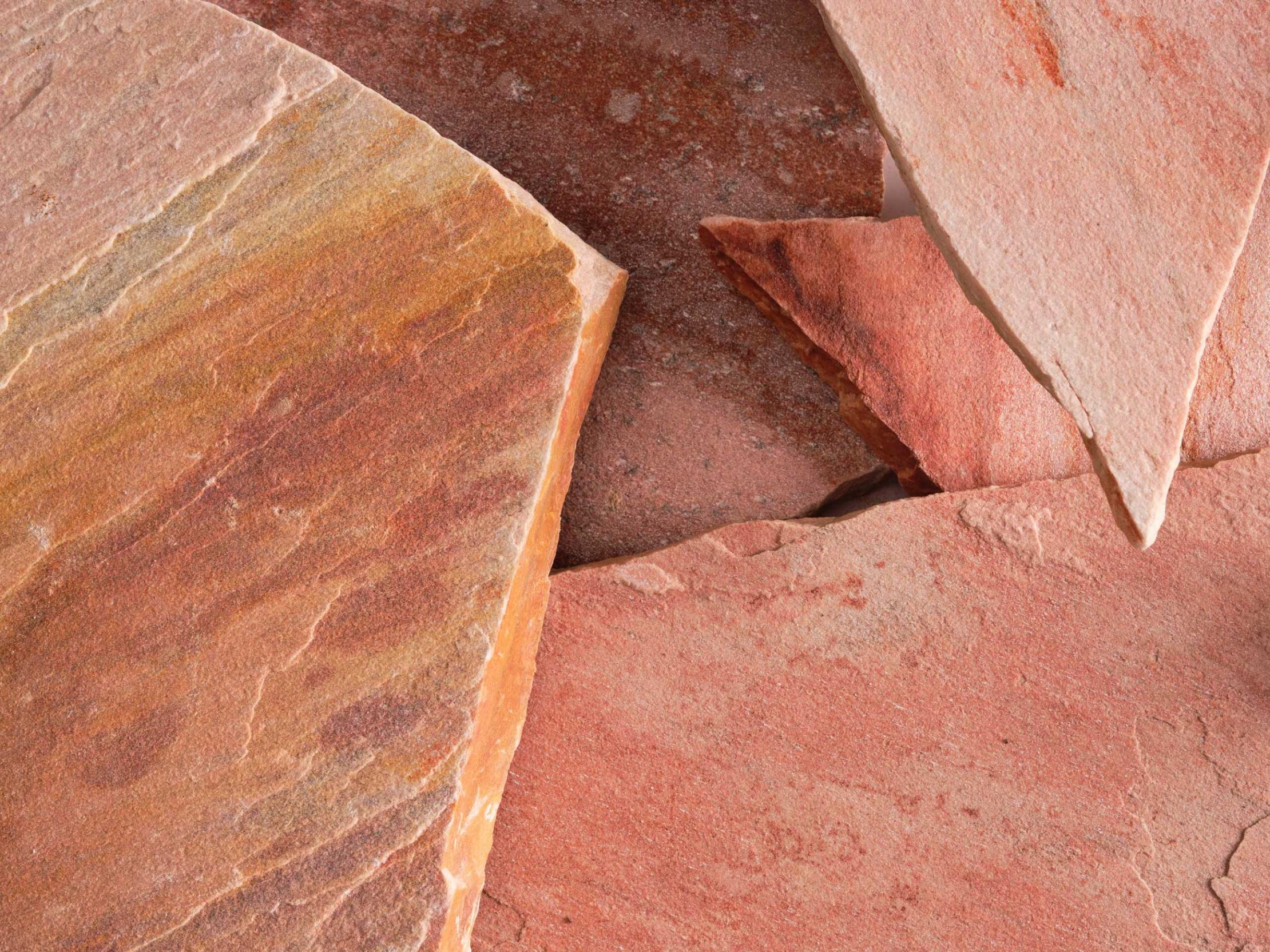
Porphyry stone, or porfido in Italian, is a volcanic rock that is particularly suitable as flagstone due to its extreme wear resistance. Porfido Rosso refers to reddish porphyry, a type of stone quarried primarily in northern Italy (Trentino-South Tyrol). Well-known porphyry quarries are located in the foothills of the Dolomites near Val di Cembra, and they have been supplying high-quality paving stones for decades. Porfido Rosso is characterized by a deep reddish-brown to purplish color, often marbled with small crystals (phenocrysts) within the rock.
This porphyry naturally splits into layers, resulting in irregular slabs ideal for "crazy paving." Historically, porphyry was widely used in Italian villages for squares and streets; the material can withstand enormous loads and remains intact even after centuries. Today, Porfido Rosso flagstones are used in exclusive garden designs or driveways designed to exude a Southern European flair. The warm color combines beautifully with greenery in the garden and with Mediterranean building materials (such as terracotta or natural stone facades). Technically, porphyry scores very highly: its compressive and abrasion strength is excellent, and water penetration is minimal. This makes it frost-resistant and, thanks to its rough texture, also non-slip. With Italian porphyry, you bring a touch of Roman reliability and beauty into your home.
Travertine flagstones (Italy & Turkey)
Travertine is a type of limestone known worldwide for its use in prestigious buildings—think of the Colosseum in Rome, which was built of travertine. As a flagstone, travertine is also an interesting choice, especially for those seeking a timeless and classic ambiance. In Italy, travertine slabs have been quarried since Roman times in Tivoli (near Rome), where the famous Travertino Romano Classico originates. This ivory-colored travertine with its characteristic veins and pores has adorned piazzas and villas for centuries. Besides Italy, Turkey is now a major producer of travertine. Turkish travertine flagstones come in a variety of colors, from light beige to silver-gray and even rusty-brown rose tones (for example, Travertine Silver and Travertine Rosé are available). Each origin has its own color shades and veining patterns, offering unique design possibilities for both classic and modern projects.
Travertine flagstones are prized for their rustic look : the irregular shape combined with the natural holes and veins gives a floor or terrace a weathered, Mediterranean feel. They are often used for terraces, patios, and around swimming pools because the surface, once sandblasted or lightly distressed, is sufficiently rough. Furthermore, travertine feels pleasant underfoot and remains relatively cool in summer. It's important to know that travertine is calcareous and porous – this contributes to its charm, but also requires proper installation and care. A professional knows, for example, that you can grout or fill the open pores if you want a smoother surface, or leave them open for a more rugged look. Travertine is generally frost-resistant (if installed correctly with good drainage) and evolves beautifully over time: the stone patinas and softens its hue as it ages. However, it does require a little more maintenance than hard quartzite; It is recommended to clean and seal travertine periodically to prevent stains and contamination. As an authority on travertine, STONE offers a wide range of top-quality products, including classic Italian and high-quality Turkish varieties. This means there's a suitable travertine flagstone with the right texture and finish for every garden design – from a sleek city terrace to a lush wellness garden.

Pietra Cortese (Turkish limestone)
Pietra Cortese is an elegant flagstone made of Turkish limestone. This stone has a fine-grained structure with a beige to light brown base color, interspersed with small fossils and brown particles. The name sounds Italian ("polite stone"), but it refers to its refined appearance: Pietra Cortese has a soft earthy tone that blends harmoniously with both classic and modern environments. This limestone is quarried in thick, irregular slabs and then usually sandblasted for use as flagstone. The surface is therefore matte and subtly rough, creating a pleasant tactile experience. Despite its soft color tones, Pietra Cortese is surprisingly hard and durable. Its technical properties are impressive: the density is high (~2670 kg/m³) and the porosity is low, which keeps water absorption very limited. Laboratory tests show that this limestone can easily withstand at least 240 freeze-thaw cycles – an indication of its winter hardiness in our climate.
Pietra Cortese flagstones are typically approximately 3 cm thick and, thanks to their strength, are suitable for patios with heavy use (e.g., driveways or busy paths). This stone is also used indoors, for example, in wellness areas or bathrooms, where the warm beige hue creates a spa-like atmosphere. A distinctive feature of Pietra Cortese is the occasional fine veining that runs through the stone—some people mistake these for hairline cracks, but in reality, they are natural sedimentary lines that do not detract from its strength in any way. Anyone looking for a neutral, timeless flagstone that is both easy to maintain and exclusive will quickly find this Turkish limestone.
How to place flagstones
Installation: Laying flagstones requires a slightly different approach than laying straight tiles, precisely because of their irregular shape and thickness. Flagstones are typically laid in a traditional wet mortar bed. The reason is simple: natural flagstones vary in thickness (sometimes a few millimeters between pieces), and a cement slurry or stabilized underlayment can compensate for these variations. By laying sufficient fresh mortar and lightly tapping each stone into the mortar, you ensure a level and stable surface. Once the laying mortar has hardened, the wide joints are usually filled with grout or a special sand-cement grout. Professionals recommend treating the stone surfaces with a pre-sealer —a temporary impregnation layer—before grouting. This prevents cement residue from penetrating deep into the pores of the stone and makes cleaning easier afterward. For the grouting itself, a grout with a coarse sand base, and possibly polymers, is often chosen, which is suitable for joints up to several centimeters wide. Make sure the joints are completely filled and wipe off any excess material before it hardens. Finally, after complete drying, a final sealer can be applied to protect the entire surface (more on this in the maintenance section).
A good laying plan is also important during installation. First, dry-fit the various flagstones into place (loosely) to experiment with the fit and the best-looking side up. Try to distribute variations in size and color well for a harmonious whole. Edge pieces or oversized slabs often need to be tapped or sanded slightly to make them fit – do this carefully to preserve the natural look. Tip: Use a string or ruler to mark reference heights across the surface. This allows you to check during installation that no stone is too high or too low compared to the desired level. If any flagstones do protrude slightly, you can tap them level with a rubber mallet while the mortar is still fresh. The patience and craftsmanship that goes into laying flagstones are amply rewarded by the unique end result – no two flagstone patios are the same, and the organic patterns create an unparalleled ambiance.

How to mantain flagstones
Maintenance: One of the major advantages of natural stone is its longevity. Flagstone surfaces typically age beautifully and require relatively little maintenance, provided you treat them properly. Regular maintenance consists of simply removing dirt and leaves (sweeping or blowing) and occasionally scrubbing with warm water and a stiff brush. This prevents algae, moss, or dirt from settling on the surface. If green deposits do form, use a suitable algaecide or a mild alkaline cleaning product specifically formulated for natural stone. Be careful with pressure washers—a gentle clean isn't harmful, but spraying too close and too hard can damage the stone or grout, especially with softer stone types. Also, avoid using acidic cleaning products on calcareous flagstones (such as travertine or some sandstones), as they can damage the surface.
Because flagstones are exposed to the elements, it's wise to protect them from stains and moisture penetration . A high-quality impregnating sealer forms an invisible barrier that repels water and dirt, while allowing the stone to breathe. Such a treatment protects porous flagstones from moisture, frost damage, stains, and UV discoloration. A good impregnation prevents oil, wine, chlorophyll, or barbecue grease from penetrating the stone, giving you more time to remove spills before they cause damage. Re-impregnating natural stone every few years is usually sufficient, depending on wear and tear and weather conditions. Note: always choose a sealer that is suitable for your type of stone (a product for dense quartzite, for example, will be different from one for porous travertine).
Travertine and other limestone flagstones, in particular, require a bit more maintenance: their open structure requires periodic cleaning and appropriate treatment to preserve their beauty. Regularly removing dirt from the pores (with a vacuum cleaner or by scrubbing) and refilling or repairing any openings will keep the stone looking beautiful. The following applies to all natural stone: the better you protect and maintain it from the start, the longer it will last. Fortunately, you can always turn to specialists for expert advice. Stone NV, for example, offers extensive knowledge, technical advice, and information sheets to help you make the right choices in materials and maintenance for every project. With the right care, your flagstone patio or floor will retain its natural beauty and unique character for many years to come.

Conclusion
Flagstones represent a perfect blend of nature, history, and design . Their irregular shapes and colors bring life to any space, whether it's a modern city roof, a rustic terrace, or a cozy kitchen-diner. Thanks to the rich variety of stone types—from Brazilian quartzite to Greek slate, from Italian porphyry to Turkish limestone—there's a suitable flagstone for every taste and application. Moreover, these stones tell a story: they connect us with centuries-old building traditions and bring the beauty of nature to the forefront in contemporary projects.
When choosing flagstones, it's advisable to consider not only color and style, but also practical properties such as slip resistance, thickness, and maintenance requirements. An experienced natural stone specialist can help with this. For example, Stone NV, with nearly a century of experience in natural stone, offers a variety of exclusive flagstones (think Albino Yellow and Flamingo quartzite) that you won't find anywhere else in the world. These experts will contribute to both the creative design and the technical implementation, ensuring your flagstone project is not only aesthetically pleasing but also durable and easy to maintain.
In short, whether you're an architect, interior design enthusiast, or contractor, flagstones offer in-depth possibilities for enhancing spaces. From indoor floors to outdoor patios, they create a lasting impression with their natural elegance. With the right choice of stone, thoughtful installation, and proper maintenance, you can enjoy a unique floor or paving that only becomes more beautiful with age.
Be inspired by the wide range and timeless appeal of flagstones, and discover how these polygonal gems can elevate your home or project environment. Contact us today!